
The Chicken-and-Egg Problem of Bioplastics
Bioplastics are by no means a novelty anymore. Everyday items such as coat hangers, pen barrels, and even beverage trays can already be manufactured in high quality using bioplastics. Nevertheless, the global market share of bioplastics—at less than one percent—remains ridiculously low at present. There are many reasons for this. First and foremost is the price. Given the currently low production volumes, it is difficult for manufacturers to produce bioplastics at competitive prices. Consequently, the bioplastics market faces a “chicken-and-egg problem”: Demand is low because the price is high. However, the price is so high precisely because demand is so low. Pioneers are needed to break this cycle. PAPUREX has seen itself as a pioneer in the production of high-quality tubing for decades and has therefore been experimenting with bioplastics for quite some time.
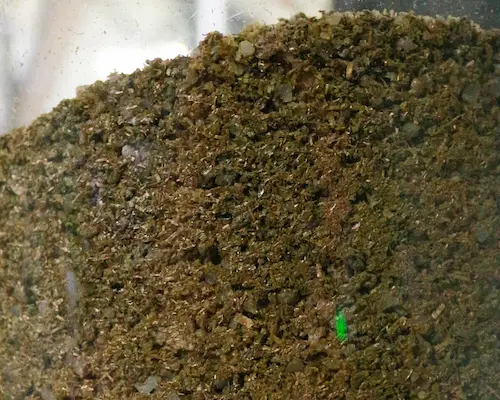
Bio-based Plastics vs. Biodegradable Plastics
The term “bioplastics” is often used to lump many different things together. Since the term is not legally protected, various plastics are marketed under it:
- Bio-based plastics: These plastics consist entirely or in part of renewable raw materials. Examples include grass fibers, polylactic acid, and sugarcane.
- Biodegradable plastics: These plastics can be completely broken down into their individual components by microorganisms such as bacteria or fungi. Simply put: They decompose under environmental conditions.
- Bio-based and biodegradable plastics: A bio-based plastic can combine both of the properties described above and be both bio-based and biodegradable at the same time. However, it is important to understand that this is not necessarily the case.
The two major environmental benefits of bioplastics are that they emit fewer greenhouse gases during production (bio-based) or are biodegradable without leaving any residue. Ideally, they combine both.
Bioplastic for the PAPUREX Trials
The bioplastic used in the current PAPUREX trials is both biodegradable and bio-based. It thus combines the two environmental benefits of lower emissions and residue-free decomposition. While this may sound like a perfect solution at first glance, it still involves a great deal of work. First, the intended use of a bioplastic tube must be known in order to determine the desired properties—just as is the case with conventional pneumatic tubing. In most cases, biodegradability is not even desired for tubing. Ideally, these should last for decades and not simply disintegrate. For this reason, the trials are taking place in a business sector that lies far removed from the traditional applications of polyurethane tubing. PAPUREX will provide further details once the trial phase is complete.
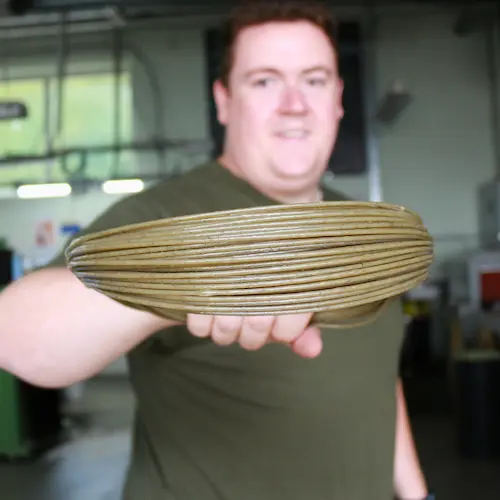
The Extrusion of Bioplastics
Another major challenge, particularly in the field of extrusion, is the processability of bioplastics. Very tight tolerance specifications apply to most PAPUREX products. However, natural products—which bio-based plastics inherently are—inevitably involve a certain degree of irregularity. This is literally in the “nature” of the material. This, however, significantly complicates the precise extrusion of bioplastics, which is why these trials can only be conducted in stages.
Do you have a project involving bioplastics?
As mentioned at the outset, PAPUREX sees itself as a pioneer. However, one company alone is not enough to significantly increase the market share of bioplastics and thereby create more affordable prices in this segment. If you need an extruded product that you’d like to have manufactured from a bioplastic, PAPUREX is your partner for development.