
Special Tubing - Definition and Use Cases
Special Tubing – Definition and Distinction from Standard Tubing
To understand when we’re referring to Special Tubing, it’s essential to distinguish it from standard tubing. In the field of polyurethane tubing, the term “standard” is typically used when the tubing is made from polyurethane without any special additives. For a long time, the dominant tubing in this segment was the classic polyurethane Pneumatic tubing, which is typically manufactured using a polyester base.
Over the past few decades, however, a second classic has emerged: the polyether-based polyurethane tubing. Polyether-based polyurethane has the advantage of being resistant to microbes and hydrolysis, making it suitable for outdoor applications as well. Consequently, polyester- and polyether-based polyurethane tubing without additives is referred to as standard tubing.
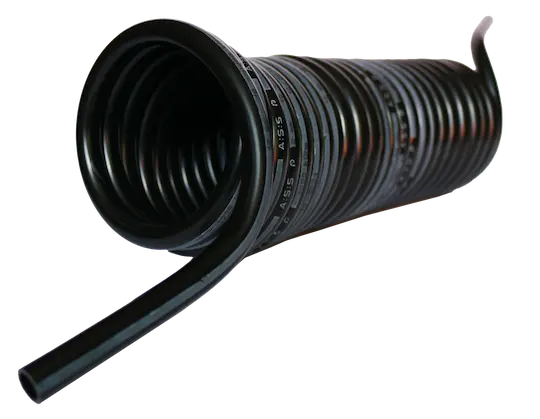
It is also important to note that this tubing does not have any special shape or dimensions. It is manufactured in standard sizes and is simple round tubing with a “hole” in the center. In addition, it typically has a Shore hardness of about 98 A.
Tubing that deviate from these criteria is referred to as Special Tubing. It is therefore either made of a special material, manufactured with special additives, has a specific Shore hardness, or features an unusual shape.
| Criterion | Standard Tubing | Special Tubing |
|---|---|---|
| Base Material | Polyurethane on a polyester or polyether base, without special additives | Deviates from the standard material or is made of a special material |
| Additives | No special additives included | Manufactured with special additives |
| Shore Hardness | Usually around 98 A | Deviates from the usual shore hardness |
| Shape/Dimensions | Standard dimensions; simple, round shape with a "hole" in the center | May have an unconventional or special shape |
| Base Polymer | Polyester base (classic pneumatic tubing) or polyether base | Not limited to standard polyester/polyether base |
| Special Properties | Polyether base: resistant to microbes and hydrolysis, making it suitable for outdoor use | Individually tailored properties through material, additives, or shape |
| Typical Application | Classic pneumatic applications | Applications with special requirements that go beyond the standard |
What types of Special Tubing are available?
There are virtually no limits to the variety of Special Tubing. They are often developed in response to a specific problem. In some cases, these problems affect entire industries, which means that Special Tubing can become true classics. One example of this is flamex®. This flame-retardant Special Tube is used in areas where flying sparks cause problems for standard polyurethane hoses. This is the case, for example, near welding robots. The sparks damage standard plastic hoses, leading to frequent failures.
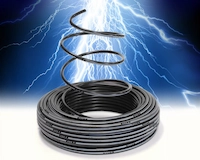
Another example is antistatic tubing. Static electricity can cause problems in various situations, making the use of Special Tubing advisable. Potentially explosive areas, where every spark can become a hazard, are one application for antistatic tubing. However, it is also used in the production of sensitive electronics. They are also useful when fine powders are conveyed through the tubing, as these powders can adhere to the walls due to static charge and, in the worst case, clog the line. A proven antistatic tubing is the A:S:S®.
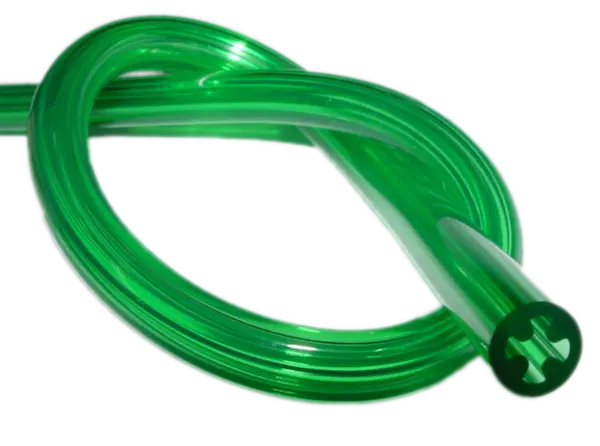
The first two Special Tubes mentioned derive their unique properties from special material additives. The KSS kink-resistant tubing, on the other hand, is made from conventional polyether polyurethane. It is characterized by its internal profile, which prevents kinking even at the tightest bend radii. This allows the tubing to be installed in the smallest of spaces without compromising flow.
The examples mentioned above demonstrate that Special Tubing can take a wide variety of forms. The following overview shows the portfolio of Special Tubing offered by the hose manufacturer PAPUREX:


When Does the Use of Special Tubing Make Sense?
Using special tubing is advisable whenever standard tubing reaches its limits. Conversely, this means that an application that works fine with a conventional polyurethane tubing based on polyether or polyester does not require specialty tubing either. While special tubing offers advantages in demanding applications, it is often more expensive than the standard due to its more complex manufacturing process. Nevertheless, the use of specialty tubing can be worthwhile in the following cases:
Reasons for the use of special tubing At a glance:
Questions about special tubing?
Our team of experts is pleased to advise you!