
PE Tubing at PAPUREX—Why?
Extruding PE tubing is not one of PAPUREX’s original core disciplines. The company’s name is derived from the plastics polyamide and polyurethane, as well as the process technology of extrusion. Since the company no longer processes polyamide (reasons explained in the article “Polyamide vs. Polyurethane”), PAPUREX should really be called PEPUREX, given its recent experiments with the extrusion of PE (short for polyethylene). Don’t worry—the well-known company name won’t be changed for that reason. However, PE offers some interesting properties that, under certain conditions, give PE tubing advantages over other types of plastic tubing.
Properties of Polyethylene
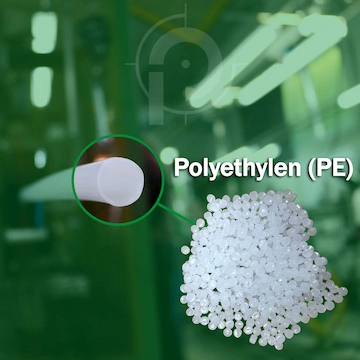
Like polyurethane, polyethylene is a thermoplastic. In short, this means the material becomes softer as temperatures rise and harder as temperatures fall. For this reason, it is suitable for extrusion. Generally, PE can be divided into four basic types:
- High-density polyethylene: PE-HD (high density)
- Medium-density polyethylene: PE-MD (medium density)
- Low-density polyethylene: PE-LD (low density)
- Linear low-density polyethylene: PE-LLD (linear low density)
Each type of PE offers its own advantages. While PE-HD is very strong and dimensionally stable due to its high density, PE-MD offers a good balance of stability and flexibility. PE-LD emphasizes high flexibility, which is why it is well-suited for the extrusion of Tubing, for example. In addition to high flexibility, PE-LLD offers high toughness, which results in better elasticity.
A general advantage of polyethylene is its good resistance to many substances it comes into contact with. For example, PE-LD is already resistant to water, alcohols, and gasoline. This makes PE tubing well-suited for use as fuel lines. PE-HD takes this resistance a step further: It is even resistant to hot water, mineral acids, alkalis, fats, and oils. Another advantage of the material is that it poses no risk to human health, which qualifies it for use in food packaging, for example.
PE also performs well in terms of recyclability. Once sorted by type, the plastic can be easily processed mechanically. While the negative headlines claiming that PE accounts for a large portion of the trash in our oceans are justified, this is not due to a lack of recyclability. The reasons lie rather in inadequate waste disposal and the sheer volume in which PE is produced. The material accounts for about 30% of global plastic production.
PE Tube vs. PUR Tube
The previous section described many advantages of polyethylene as a material. This naturally leads to a comparison with PAPUREX’s primary extrusion material, polyurethane (PUR). It is not possible to make a blanket statement here about which material is better for the manufacture of plastic tubing. When comparing PE tubing with PUR tubing, the end application must always be taken into account. Nevertheless, trends favoring one of the two materials can be identified for specific applications. The following table provides an overview of the strengths and weaknesses of PE tubing compared to PUR tubing:
Polyethylene (PE) often offers advantages in cost, weight and resistance to many aqueous media. Thermoplastic polyurethane (TPU) stands out for its elasticity, tight bending radii and abrasion resistance.
Swipe or scroll horizontally to view the full table.
| Property | Polyethylene (PE) | Polyurethane (TPU) | Assessment |
|---|---|---|---|
| Cost | Standard grades are generally more economical. | Material costs are often higher, but specific mechanical properties may justify the additional expense. | PE generally has the advantage in cost-sensitive applications. |
| Weight | Low density generally results in lower weight for the same dimensions. | Conventional solid TPU grades have a higher density. | PE has the advantage at equal volume. Actual weight per metre also depends on wall thickness. |
| Flexibility and Elastic Recovery | Flexible grades are available, particularly LDPE. Usually less elastomeric than soft TPU. | High elasticity and good elastic recovery. Suitable for tight bends and moving tubing. | TPU usually has the advantage where movement or limited installation space is involved. |
| Abrasion and Wear | Adequate for many applications, although conventional PE grades generally offer lower abrasion resistance than TPU. | Excellent abrasion resistance. Well suited to rubbing contact and mechanical wear. | TPU usually has the advantage. Special materials such as UHMWPE require separate assessment. |
| Chemical Resistance | Often offers very good resistance to acids, alkalis and salt solutions. Not universally suitable for all chemicals. | Often offers good resistance to oils and greases. Certain solvents can cause swelling or dissolution. | PE is often advantageous for aqueous chemicals. The specific medium, concentration and temperature determine suitability. |
| Water and Moisture | Absorbs virtually no water. Hydrolytic chain breakdown of the type affecting polyester TPU is not a typical degradation mechanism. | Polyester TPU can degrade, particularly in warm, humid conditions. Polyether TPU offers substantially better hydrolysis resistance. | PE has an advantage over hydrolysis-sensitive polyester TPU. This does not apply universally to all TPU grades. |
| Extrusion Processing | Pre-drying is normally unnecessary unless surface moisture or specific formulation components require it. | Thorough drying is required. Moisture can cause surface defects and significant losses in material properties. | PE requires less drying effort. Other processing conditions must still be matched to the specific grade. |
| Pressure and Temperature Performance | Strongly depends on PE grade, dimensions, temperature and duration of loading. | Strongly depends on hardness, formulation, dimensions and temperature. | No universal winner. Compare the permissible operating pressure and temperature range of the actual tubing. |
Note: This comparison covers typical materials used for extruded tubing and profiles. Polyurethane refers specifically to thermoplastic polyurethane (TPU). Properties vary with material grade, formulation and operating conditions. LDPE, for example, is softer than HDPE. This overview does not replace an application-specific suitability assessment.
What’s next for PAPUREX and PE tubing?
PAPUREX’s first extrusion of PE tubing was initially just a trial run. It proved to be quite successful. More than 45 years of experience in polyurethane extrusion provide a solid foundation for beginning to process polyethylene—even though, it should be noted, there are many differences. Our focus remains on polyurethane. However, should we receive an increasing number of customer inquiries regarding PE Tubing, it is certainly conceivable that we could undertake projects in this area.
Do you have a project for which PE Tubing might be a good fit? Our team of experts would be happy to advise you!