
Close collaboration with partners in the development of low-carbon tubing
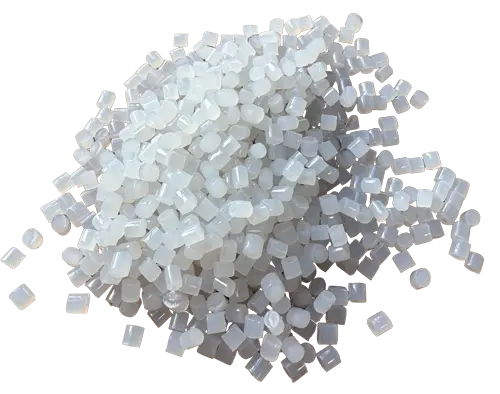
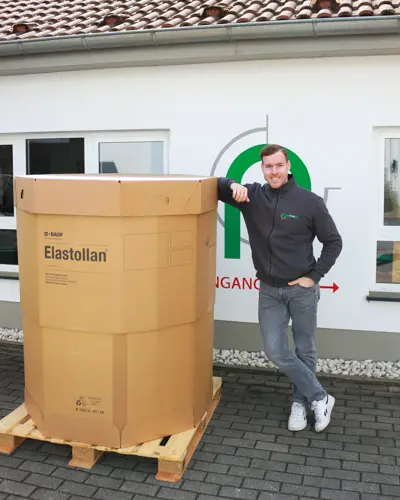
PAPUREX has been working closely with its partners for decades. Material suppliers play a particularly important role in the development of new tubing. The properties of the raw material must be closely tailored to the tubing’s intended end use. This is also the case with the development of low-carbon tubing. Here, BASF Polyurethanes GmbH, as a long-standing partner of PAPUREX, plays a key role. The company offers PAPUREX the opportunity to source biomass-balanced polyurethane. Delivery of this biomass-balanced material will begin as early as May.
Low carbon tubing using biomass-balanced material
To understand the impact of the new material, it is first necessary to understand the concept behind biomass balancing. In short, biomass balancing is a mathematical adjustment that nevertheless offers genuine environmental benefits. A portion of the products from a plastics manufacturer such as BASF is produced using bio-based raw materials. This process emits significantly fewer emissions than conventional manufacturing methods. If this proportion is 20%, the manufacturer may later issue certificates for 20% of its produced products. This means they are officially biomass-balanced. However, it is not necessarily the case that the certified product was actually manufactured using biomass. Through the demand for biomass-balanced products, PAPUREX is helping to cover the costs of this process. This will allow the proportion to be further expanded in the future. The environmental benefit is therefore real.
Starting in May, PAPUREX’s primary materials will be switched to this biomass-balanced material. This involves the procurement of several hundred tons of polyurethane per year. In this way, thousands of kilometers of Tubing will be produced that have a significantly lower impact on our environment than before.
A Major Step Toward Reducing Scope 3 Emissions
PAPUREX has been setting ambitious goals in the areas of the environment and sustainability for several years now. You can read about this process in our Environmental Statement. Last November, we were already able to announce that PAPUREX’s CO₂ emissions in Scope 1 and Scope 2 had been reduced to 0. Further information on this topic can be found in our article on CO₂-neutral production. As great as this success was—the truth is that a large portion of the CO₂ emissions generated during the production of our Pneumatic tubing comes from Scope 3.
Scope 3 also includes emissions resulting from the production and procurement of raw materials. Accordingly, sourcing biomass-balanced material is a very valuable step. The resulting CO₂-reduced Tubing will help to significantly reduce PAPUREX’s total remaining emissions. Depending on the data for the individual material, reductions of up to 50% are realistic.
Low carbon Tubing – what are the benefits for customers?
In addition to the environmental benefits, PAPUREX customers also gain an advantage from being supplied with CO₂-reduced Tubing. This allows them to reduce their own Scope 3 emissions. Furthermore, products that use this Tubing have a lower PCF (Product Carbon Footprint). In an era where reducing greenhouse gases is one of humanity’s greatest challenges, this can be a real competitive advantage.
However, the benefits go even further. PAPUREX’s CO₂-reduced tubing does not cost customers a single cent more. Management decided to take this step because it aligns with the company’s strategy. The tubing manufacturer from Odenwald bears the higher material costs itself. PAPUREX is thus making an upfront investment to reduce emissions along the entire supply chain for polyurethane tubing.